
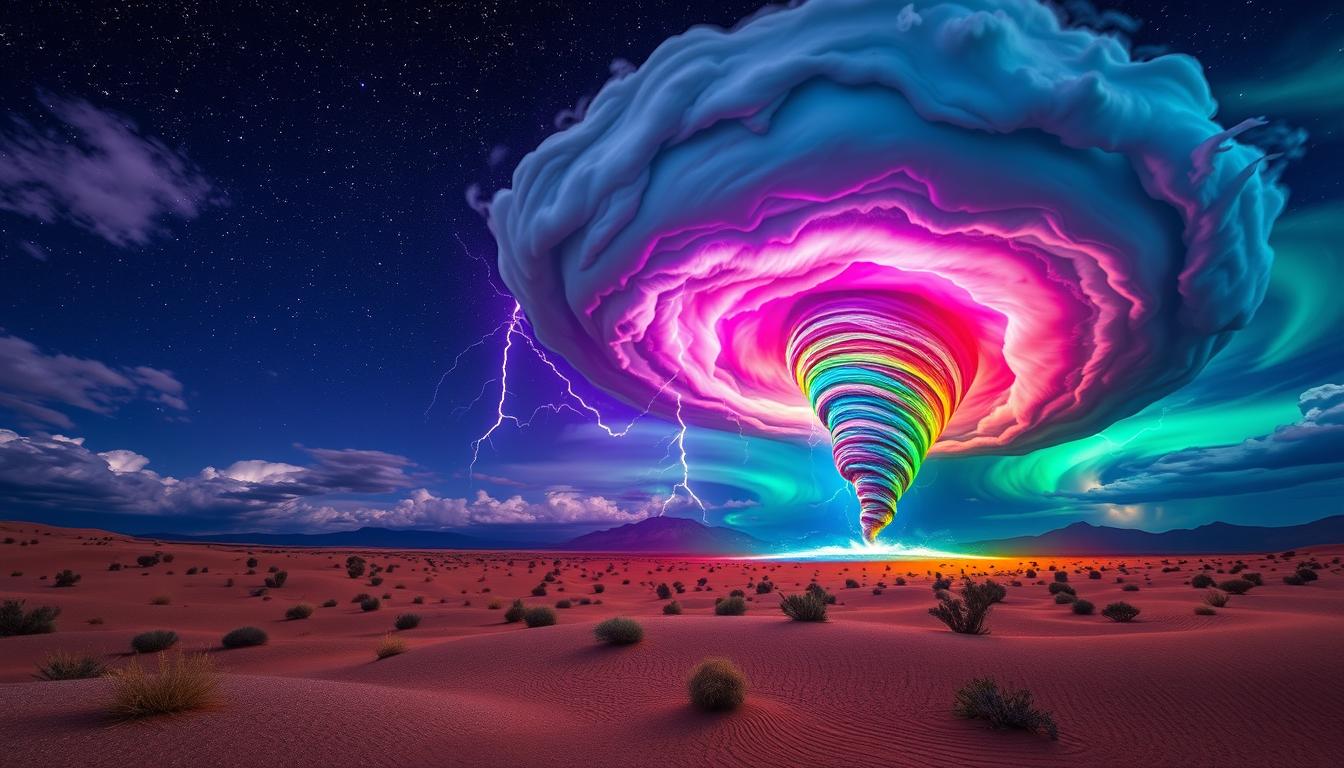
Get ready to be amazed as we explore Weather Wonders. This world is full of incredible sights, from rare atmospheric events to powerful whirlwinds. We’ll take you on a journey to see the amazing weather wonders our planet has.
If you love weather, nature, or just the amazing things our world does, you’ll love this. We’ll show you the science behind these wonders. You’ll learn about where they happen and how they change our world.
What Are Weather Wonders?
Weather wonders are amazing events in the world of meteorology. They go beyond the usual weather patterns. These events are not only interesting to watch but also help us understand the climate and environment.
Weather wonders include a wide range of events, from rare storms to beautiful light shows in the sky. These events surprise us and make us think about how different things in our world work together.
“Weather wonders are a testament to the dynamic and unpredictable nature of our atmosphere, reminding us of the power and beauty of the natural world.”
By studying these weather wonders, we learn more about our planet’s climate. Events like big storms and beautiful auroras show us how our environment works. This knowledge helps us fight climate change and other environmental problems.
Seeing a tornado or the Northern Lights is truly amazing. Weather wonders make us curious about our climate and environment. By exploring these marvels, we can appreciate how complex and strong our planet is.
The Science Behind Extreme Weather
Studying the science behind weather is really interesting. It covers everything from huge thunderstorms to cold blizzards. The science shows how temperature, pressure, and air movements create extreme weather.
Meteorologists watch these factors closely. They use advanced tools to predict weather events. By studying temperature changes, pressure, and air flow, they understand weather wonders like tornadoes and hurricanes.
Knowing the science behind extreme weather is key for good forecasts. It also helps us see how climate change affects weather. As the planet warms and weather patterns change, scientists must keep improving their models.
“The atmosphere is a complex, dynamic system, and the more we unravel its secrets, the better we can safeguard our communities from the devastating effects of extreme weather.”
Research and new technology keep helping us understand atmospheric phenomena, extreme conditions, and forecasting insights. This knowledge helps us prepare for the amazing weather we see.

Rare Weather Events in the U.S.
The United States is a land of diverse weather wonders. Nature’s power shows in awe-inspiring and rare phenomena. From Arizona’s dust storms to the Midwest’s ice storms, these geographic wonders show the dynamic mix of climate and geography.
One of the most captivating weather wonders is the fire whirl. It’s a vortex of flames that can reach hundreds of feet. These rare events often happen in California, where seasonal marvels like droughts and high winds create the perfect conditions.
“The power and unpredictability of these rare weather events is both humbling and mesmerizing.”
These geographic wonders are not just beautiful; they also deeply affect local communities and ecosystems. It’s important to understand the science behind these weather wonders. This helps us mitigate risks and prepare for their potential effects.
Exploring the Earth’s weather wonders reminds us of our planet’s awe-inspiring beauty and power. From the desert to the heartland, the United States is a canvas for nature’s most extraordinary seasonal marvels.
Whirlwinds and Their Impact
Whirlwinds are fascinating and powerful. They range from tornadoes that can destroy neighborhoods to dust devils in deserts. These air columns can greatly affect the environment and people around them.
Whirlwinds form when warm air meets cool air. This creates a spinning motion. The strength of a whirlwind depends on many factors like temperature and wind.

Whirlwinds can cause a lot of damage. Tornadoes are especially destructive, leaving destruction behind. Waterspouts, which are like tornadoes over water, can harm coastal areas and ships.
Thanks to better weather forecasting, we can now prepare for whirlwinds. Scientists study what makes whirlwinds happen. This helps us predict and warn communities about these extreme weather events.
Colorful Weather: Natural Light Shows
The world is full of Weather Wonders, nature’s amazing sights. These colorful events in the sky turn ordinary days into nature’s spectacles. From bright rainbows to stunning aurora borealis, they show the beauty and complexity of our planet.
Rainbows happen when sunlight passes through water droplets in the air. This creates a colorful arc, often seen as a sign of hope. Rainbows have deep meanings across cultures, inspiring people everywhere.
Sundogs are bright spots on either side of the sun, caused by light and ice crystals. These atmospheric phenomena amaze us and teach us about our weather.
“The beauty of the natural world is one of the great spiritual resources of our lives.”
The aurora borealis, or northern lights, is truly awe-inspiring. It’s caused by solar particles and our magnetic field. Seeing it is a deep experience, showing us our planet’s connection to the universe.
From rainbows to northern lights, nature’s spectacles amaze and inspire us. These atmospheric phenomena are not just pretty. They remind us of the incredible forces that shape our world.
Strange Precipitation Types
The world is full of meteorological marvels. Rare and unusual forms of precipitation are found across different climate patterns and seasonal marvels. Events like “blood rain” and “diamond dust” amaze and intrigue us.
Blood rain is when rain looks red or scarlet. It happens when red dust or pollen is in the air. Raindrops pick up this material, making the rain look red. This has been seen for centuries, even in ancient Greece and Rome.

“Diamond dust” is another wonder. It’s tiny, glistening ice crystals in the air. You see it in cold places like the poles and high mountains.
“The beauty of these meteorological marvels lies in their rarity and the unique climate patterns that give rise to them. Each strange precipitation event is a testament to the wonders of our dynamic seasonal marvels.”
Unusual precipitation types are both whimsical and bizarre. They fascinate scientists and capture our imagination. As we learn more about our planet, these meteorological marvels will keep surprising and delighting us.
Lightning: More Than Just Thunder
Lightning is a weather wonder that’s more than just thunder. It’s complex and captivating. From ball lightning to sprite lightning, it’s a true marvel of extreme conditions.
New research explores how lightning forms. It shows lightning’s role in the global electric circuit. Lightning is not just a fleeting display of nature’s power; it shapes our environment and even influences human activities. It can start wildfires and affect aviation.
“Lightning is one of the most beautiful and terrifying manifestations of the power of nature.” – David Attenborough
Volcanic lightning is rare and stunning. It happens when ash and rock particles collide in an eruption. This creates static electricity that discharges as lightning. It’s a unique sight that also helps us understand our planet.
As we learn more about lightning, we appreciate our weather more. From cloud-to-ground strikes to ball lightning, these phenomena show nature’s power. They remind us of the importance of understanding our world.
Weather Anomalies in Geography
The world is full of amazing geographic wonders. These wonders create fascinating climate patterns and environmental dynamics. For example, the Catatumbo lightning in Venezuela and the Sailing Stones of Death Valley are just a few examples. They show how our planet has many weather-related phenomena that are hard to understand.
The Catatumbo lightning is a natural wonder that happens over the Catatumbo River. It has an average of 28 lightning strikes per minute on over 140 nights a year. This event is thought to be caused by the area’s geography, like nearby lakes, swamps, and the Andes mountain range.
The Sailing Stones of Death Valley in California are also very interesting. These heavy rocks move across the dry lakebed of Racetrack Playa, leaving long trails. Scientists think their movement is due to the area’s unique topography, low-friction surface, and rare weather patterns.
“The interplay between geography, climate, and environmental dynamics is essential in shaping the world’s most intriguing weather anomalies.”
These wonders show how the earth’s physical features and atmospheric processes work together. By studying these events, scientists learn more about the complex relationships between land, air, and water. This helps us understand the global environmental dynamics that shape our planet.
Effects of Weather Wonders on Wildlife
Weather Wonders, like the Northern Lights, can deeply affect our ecosystems and wildlife. These natural wonders can change how animals behave, migrate, and even their numbers. This can lead to big changes in our environment.
The colorful displays of the Northern Lights can mess up birds’ migration. They might get lost or go the wrong way. Also, strong storms can destroy homes for animals, making them struggle to survive.
“Weather Wonders can be both captivating and disruptive to the natural world. Understanding their effects on wildlife is crucial for preserving the delicate balance of our ecosystems.”
Some animals even change color in response to snow, like “snow kangaroos.” This helps them hide from predators in the winter. It’s a unique way animals adapt to their surroundings.
As climate change and weird weather patterns grow, we must learn more about Weather Wonders. We need to understand how they affect animals. This knowledge helps us protect our ecosystems for the future.
Documenting Weather Wonders: Citizen Science
Exploring our changing atmosphere is more than just for meteorologists. The Weather Wonders that amaze us, from rare events to stunning sights, can be recorded by anyone. Now, thanks to citizen science, we can all help study these wonders.
In the United States, more people are joining citizen science projects. These projects let the public help with weather research. Using apps and websites, they collect data on atmospheric phenomena.
“Citizen science is a game-changer in the world of weather research. It allows us to collect data on Weather Wonders that would otherwise go unnoticed, providing crucial insights for scientists and policymakers alike.”
Citizen scientists report on things like hail, lightning, and tornadoes. They also document special cloud shapes. Their work helps us understand rare weather events better. It adds to what weather agencies already know, giving us a fuller view of Weather Wonders.

By joining in, citizen scientists learn more about our world. They also help improve forecasting insights and our grasp of climate change. This team effort changes how we study and deal with Weather Wonders.
The Future of Weather Wonders
Climate patterns are changing, and Weather Wonders might become more common or intense. Meteorologists and climate scientists are watching closely. They use new technologies and research to understand and predict extreme weather.
Global warming is a big concern for Weather Wonders. Rising temperatures and changes in rain and air could make rare weather events more common. Scientists are trying to predict these changes to help communities get ready.
New tools like satellite images, sensors, and data analysis are changing how we study Weather Wonders. These tools help scientists learn more about weather anomalies in real-time. This knowledge helps us prepare for and protect against extreme weather.