
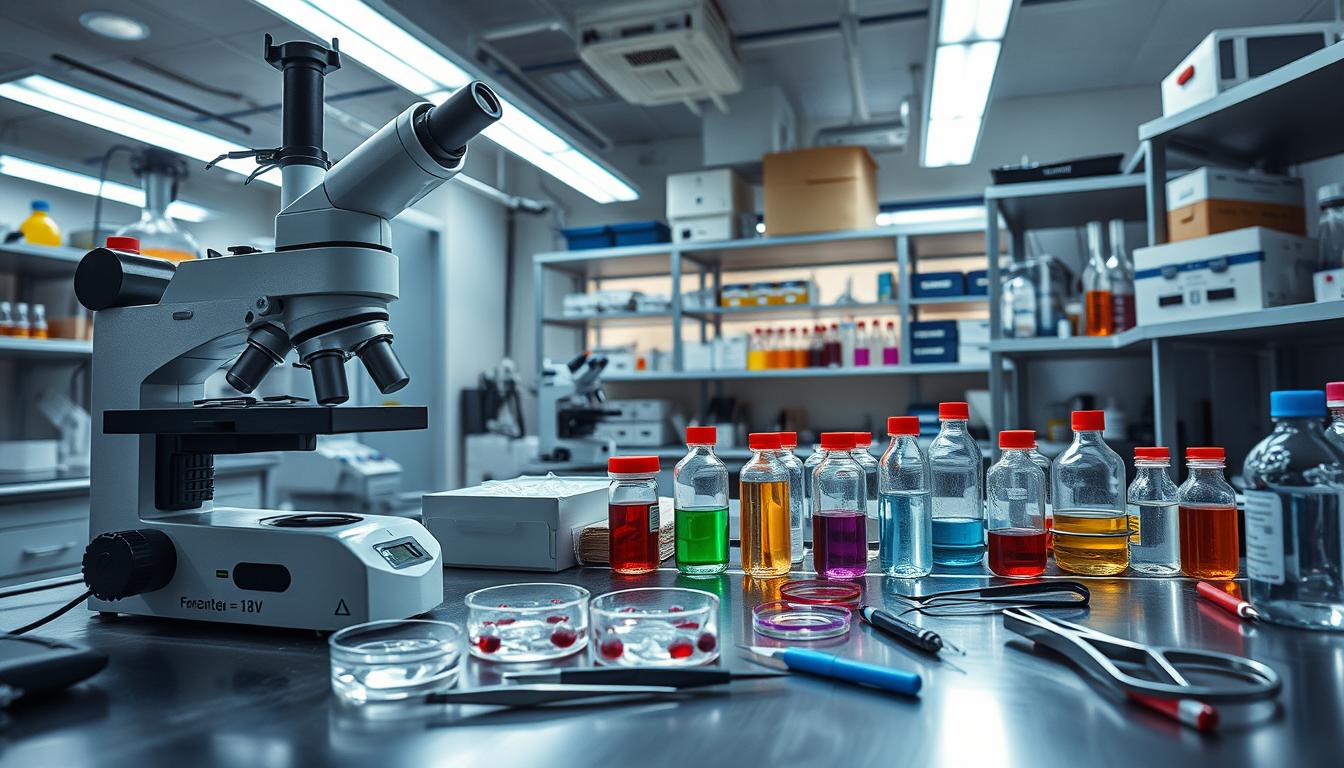
Forensic science is a key tool in solving crimes. It uses science, analysis, and detail to uncover the truth. This has changed how police solve crimes.
Forensic science applies science to find and analyze evidence at crime scenes. This includes fingerprints, DNA, and more. Each piece of evidence can reveal the truth and bring justice.
Forensics helps investigators piece together crimes and find culprits. It uses many sciences like chemistry and biology. Together, they solve complex cases.
In this article, we explore the world of forensics. We’ll look at its history, processes, and new technologies. Join us as we see how science solves crimes and brings closure to victims’ families.
What is Forensic Science?
Forensic science uses science to solve crimes. It involves collecting and analyzing evidence from crime scenes. This helps solve cases and supports legal actions. Forensic scientists use many sciences, like chemistry and biology, to find the truth.
At the heart of forensic science is Crime Scene Investigation. Experts carefully examine crime scenes for Trace Evidence. They look for DNA, fingerprints, and other clues to identify suspects.
“Forensic science is not just about solving crimes; it’s about uncovering the truth and bringing justice to those who have been wronged.”
Forensic scientists are key in the criminal justice system. They provide evidence that helps convict the guilty and clear the innocent. Their work is vital in many cases, including murders and financial crimes.
As technology grows, so does forensic science. New tools and methods help solve crimes. From drones to digital evidence analysis, forensic science leads the fight against crime.
History of Forensic Science
The history of forensic science goes back to ancient times. Early civilizations used basic methods like Fingerprinting and Criminal Investigation to solve crimes. But, it wasn’t until the 19th century that it became a real science.
Edmond Locard, a French criminologist, was a key figure. He came up with the “Locard Exchange Principle.” This idea says that every contact leaves a trace. It changed how Fingerprinting and other evidence were handled at crime scenes.
“Every contact leaves a trace.”
Forensic toxicology also marked a big milestone. It started in the early 20th century. It lets investigators find and study poisons and substances used in crimes. This field is now key in Criminal Investigation.

Technology has made forensic science better over time. Now, DNA analysis helps solve crimes more easily. Today, forensic science is vital in the criminal justice system. It helps catch criminals and gives justice to victims.
Crime Scene Investigation Process
Unraveling the mysteries at a crime scene is a complex and meticulous process. Forensic experts use a series of steps to gather critical evidence. Crime Scene Investigation is key to any successful criminal investigation, setting the stage for the case.
The first step is to secure the crime scene. This ensures the preservation of Trace Evidence that could provide invaluable clues. Investigators document the scene with photographs, sketches, and written reports. This detailed documentation helps in analyzing the evidence later.
After documenting the scene, the collection of physical evidence starts. Forensic experts collect and preserve items like fingerprints, DNA samples, weapons, and more. Keeping the evidence’s chain of custody is crucial to ensure it’s admissible in court.
The last step is analyzing the evidence in specialized forensic laboratories. These labs use advanced techniques to uncover hidden stories in the physical clues. The findings help reconstruct the events and lead to identifying and catching the perpetrator.
Types of Forensic Evidence
Forensic science is key in solving crimes. DNA analysis, ballistics, and fingerprinting are top tools for investigators.
DNA analysis identifies people through their unique genetic code. It’s used in blood, saliva, or hair. This method links suspects to crime scenes and clears the innocent.
Ballistics studies firearms and bullets. Forensic experts match bullets and casings to crimes. This links a weapon to a specific crime.
Fingerprinting is a classic method still used today. It matches suspects to evidence at crime scenes. This helps build a strong case against the perpetrator.
“Forensic evidence is the backbone of modern criminal investigations. It allows us to connect the dots and bring justice to the victims and their families.”
These forensic tools are crucial in solving complex cases. Science helps investigators uncover the truth. This ensures justice is served.

The Role of Forensic Chemistry
Forensic chemistry is key in solving crimes. It analyzes evidence and substances found at crime scenes. Toxicology, a part of it, looks at drugs, poisons, and chemicals linked to crimes.
Forensic chemists use tools like gas chromatography and mass spectrometry. These help find and measure substances. They learn about the substances’ nature and effects. This information helps investigators understand what happened and who was involved.
“Forensic chemistry is the application of chemistry to the law, helping to solve crimes and bring justice to victims.”
Forensic chemists also study other evidence like fibers, paint, and explosives. They find connections between suspects, victims, and crime scenes. This helps solve criminal cases.
The field of Forensic Science keeps getting better. New technologies and methods help forensic chemists do their job better. Forensic chemistry’s role in solving crimes is becoming more important. It provides key evidence that helps catch criminals.
Forensic Biology and Genetics
In forensic science, forensic biology and genetics are key to solving crimes. DNA analysis has changed how crimes are investigated. It lets experts link suspects to crime scenes and identify victims.
DNA analysis uses techniques like PCR to study DNA. This helps match DNA from crime scenes with suspects or victims. Forensic pathology examines human remains to find out how someone died. This helps solve cases.
“DNA evidence has become a powerful tool in the fight against crime, allowing us to solve cases that would have otherwise remained unsolved.”
The growth in DNA Analysis and Forensic Pathology has changed the criminal justice system. It makes identifying criminals and solving cases more reliable. As science improves, forensic biology and genetics will keep playing a big role in justice.

Forensic Psychology: Understanding Criminal Minds
In the world of forensic science, forensic psychology is key. It helps us understand why people commit crimes. This field combines psychology and criminal investigation to give us a peek into the minds of criminals.
Forensic psychologists study what makes people commit crimes. They look at personality, mental health, and environment. This helps police create profiles and find the right treatment for offenders.
“Understanding the criminal mind is the key to preventing future crimes and ensuring justice is served.”
Forensic psychologists are experts at criminal profiling. They use psychology to make detailed profiles of unknown criminals. These profiles help police find the right suspects by giving clues about the criminal’s background and motives.
They also help in court. They give expert opinions on the mental state of defendants. This information helps decide the right punishment and treatment for them.
Forensic psychologists connect psychology and criminal investigation. They give us important insights that help solve crimes and prevent them. Their work helps us understand the link between the human mind and crime.
The Impact of Technology on Forensics
Forensic science has seen huge changes thanks to new technology. Digital forensics and advanced crime scene work are key. These changes have greatly improved how we investigate and analyze evidence.
Digital Forensics is a big deal in today’s forensic world. It helps find important info on digital devices like computers and phones. Experts use this to solve crimes by looking at data and digital clues left by criminals.
3D crime scene models are also becoming more common. They use special imaging to create detailed, three-dimensional scenes. These models help keep evidence safe and give clues about what happened.
“Technology has revolutionized the way we approach forensic investigations, opening up new avenues for gathering and analyzing evidence that were once beyond our reach.”
Technology’s role in forensics goes beyond just these areas. It includes advanced DNA tests and artificial intelligence for recognizing patterns. Forensic science keeps getting better, adapting to new crimes and tools.

As our world gets more digital, tech’s role in forensics will grow. It gives law enforcement powerful tools to find the truth and solve crimes. The future of forensic science depends on using technology to solve tough cases.
Legal Considerations in Forensic Science
Forensic Science and Criminal Investigation are closely linked. The use and understanding of forensic evidence are key in court cases. Legal and forensic experts must follow strict rules and guidelines to keep evidence reliable and trustworthy.
One major issue is whether evidence can be used in court. Judges check if the methods used to gather and analyze evidence are sound. Forensic experts must explain their methods and findings clearly, facing questions from the other side.
Expert opinions are also vital. Forensic experts need to be qualified, experienced, and impartial. They must give unbiased opinions that can stand up to legal scrutiny. Keeping evidence unbiased and following the chain of custody is crucial.
“The admissibility of forensic evidence is a delicate balance between scientific integrity and legal requirements. Forensic professionals must constantly adapt to evolving legal standards to ensure their work can withstand the rigors of the courtroom.”
Important cases like Daubert v. Merrell Dow Pharmaceuticals and Frye v. United States have shaped Forensic Science law. These cases have greatly influenced how Forensic Science is used in investigations and trials.
As Forensic Science grows, legal and scientific fields must work together. They must ensure justice is served while protecting individual rights and the integrity of the legal system.
Conclusion: The Importance of Forensics in Justice
Forensic science is key in the fight for justice. It helps solve crimes and makes sure the justice system is fair. By analyzing evidence and using DNA technology, forensics changes how we investigate crimes.
Forensic science is very accurate and reliable. It helps find the guilty, clear the innocent, and get convictions. Experts in chemistry, biology, and psychology use their skills to understand crimes and the people who commit them.
Forensic Science keeps getting better, thanks to new technology and the drive for truth. It’s a crucial part of the justice system. From the crime scene to the courtroom, forensics helps make sure justice is served and the innocent are safe.